

Artificial Intelligence in Education: Empowering Students to Learn with Purpose
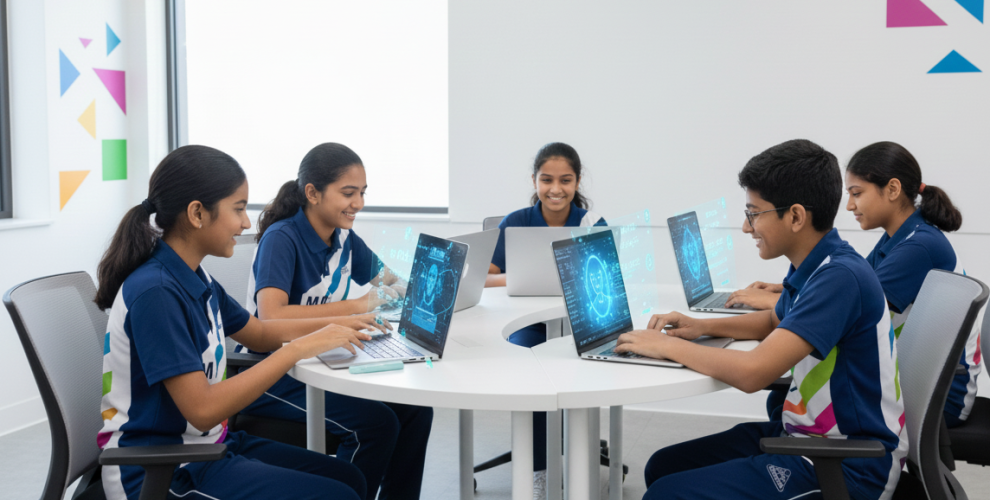
The world of education stands at a remarkable crossroads where technology meets pedagogy in unprecedented ways. Artificial Intelligence has emerged not as a replacement for human teaching but as a powerful partner in creating personalized, engaging, and effective learning experiences that were unimaginable just a few years ago. Yet as we embrace these technological capabilities, a critical question emerges: How do we ensure that students don’t just learn with AI, but grow with purpose—developing not just knowledge but wisdom, not just skills but character, not just competence but compassion?
At Mentor International School in Hadapsar, we are pioneering an approach that harnesses AI’s transformative potential while keeping human development, ethical growth, and purposeful learning at the center of education. Our vision recognizes that the future belongs to individuals who can leverage technology intelligently while remaining grounded in values, driven by purpose, and committed to making meaningful contributions to society.
Understanding AI in Education: Beyond the Hype
Artificial Intelligence in education represents far more than flashy technology or futuristic gadgets. AI encompasses adaptive learning platforms that personalize content, intelligent tutoring systems providing real-time guidance, automated assessment tools freeing teachers for meaningful interaction, data analytics identifying students needing support, and natural language processing enabling conversational learning assistants.
The numbers tell a compelling story: Students in AI-powered learning environments achieve 54% higher test scores, show 30% better learning outcomes, and experience 10x more engagement compared to traditional methods. The AI education market is projected to grow from $5.18 billion in 2024 to $112.30 billion by 2034, reflecting the technology’s expanding impact.
Yet these statistics, impressive as they are, tell only part of the story. The true value of AI in education lies not in replacing human elements but in amplifying them—giving teachers more time for mentoring, providing students with personalized support, and creating space for the deep, purposeful learning that develops complete human beings.
The Power of Personalized Learning
One of AI’s most transformative capabilities is delivering truly personalized education at scale—something traditional classroom models struggle to achieve.
Adapting to Individual Learning Styles
Every child learns differently. Some grasp concepts through visual representations, others through hands-on experimentation, and still others through verbal explanation and discussion. AI-driven platforms analyze performance data to identify strengths and weaknesses, offering custom feedback and resources accordingly.
AI helps tailor educational content according to a student’s learning style, pace, and interests, ensuring that advanced learners aren’t held back by class pace while struggling students receive additional support without stigma or delay. According to educational research, personalized learning through AI can increase student achievement by up to 20%.
Closing Learning Gaps Early
Many students fall behind due to one-size-fits-all teaching or missed foundational concepts. Traditional classrooms often move forward regardless of whether all students have mastered prerequisite knowledge, creating cumulative gaps that grow over time.
AI-powered platforms adapt in real time to each learner’s level, offering remedial content, guided practice, and personalized feedback to close gaps early. When a student struggles with fractions, the AI system can identify the specific conceptual misunderstanding and provide targeted practice—something a teacher managing 40 students might not catch immediately.
Supporting Diverse Learners
AI enables adaptive content delivery, helping students receive the right material at the right time based on their behavior and progress. For students with learning differences, AI provides accommodations automatically—adjusting reading levels, providing text-to-speech, offering multiple representation formats—ensuring every child can access curriculum effectively.
Many AI tools offer multilingual support, allowing students to access content in their preferred language—something especially valuable in India’s diverse linguistic landscape where students may be more comfortable learning in regional languages initially.
Empowering Teachers, Not Replacing Them
A common concern about AI in education is whether technology will replace human teachers. The reality is precisely the opposite: AI empowers teachers to do what they do best—inspire, mentor, guide, and connect with students on human levels.
Freeing Time for What Matters Most
With AI handling repetitive tasks like grading, scheduling, or tracking student progress, teachers can spend more time mentoring, planning creative lessons, and engaging with students one-on-one. Research shows that AI can reduce teachers’ administrative burden significantly, returning hours each week to meaningful educational activities.
Automated grading systems quickly evaluate assignments, quizzes, and exams, providing rapid turnaround that helps learners fix mistakes early and reduces the time teachers spend on routine evaluation.
Data-Driven Teaching Insights
AI systems analyze student data—attendance, test scores, and engagement patterns—to identify those at risk of falling behind. These insights help teachers act early with remedial plans or individualized attention, preventing small struggles from becoming major obstacles.
Rather than replacing teachers, AI helps them work smarter. It can suggest lesson plans based on syllabus coverage and student needs, generate learning assessments, flag students who may need support, and help teachers reflect on their teaching methodologies.
Supporting Effective Classroom Management
In classrooms where one teacher manages many students, individualized attention becomes challenging using traditional methods alone. AI tools act as intelligent learning assistants, guiding students through concepts, resolving doubts instantly, and enabling self-paced progress even in large class settings.
This support system doesn’t replace the teacher’s role but multiplies their impact, allowing educators to provide personalized attention to many more students through technology-assisted learning.
24/7 Learning Support: Breaking Time and Space Barriers
Traditional education is constrained by classroom hours and teacher availability. AI transforms learning into an always-accessible resource.
Intelligent Tutoring Systems
Intelligent tutoring systems and AI-powered learning assistants provide round-the-clock access to help, answering questions, giving hints, or re-teaching concepts in simple ways. This is especially useful for learners who may need additional support beyond school hours.
These systems mimic effective tutoring approaches, offering step-by-step assistance and tracking progress, particularly effective in complex subjects like mathematics where immediate feedback on problem-solving approaches significantly improves learning.
Extended Learning Access
AI-powered learning platforms make quality educational support available whenever students need it, not limited by school hours or teacher availability. Students can access learning resources, practice problems, and explanations at their own convenience, supporting flexible, self-paced learning alongside structured classroom instruction.
Growing with Purpose: The Human Element
While AI provides remarkable tools for learning, education’s ultimate purpose extends far beyond knowledge acquisition. True education develops character, builds purpose, cultivates wisdom, and prepares students to contribute meaningfully to society.
Developing Critical Thinking in an AI World
As AI becomes ubiquitous, students need skills to navigate online information, recognize AI-driven recommendations, and understand how digital systems shape their experiences. Critical thinking about technology itself becomes essential.
We teach students to ask: What is this AI system optimizing for? What biases might be embedded in its recommendations? When should I rely on AI assistance, and when should I think independently? How do I verify AI-generated information?
These questions develop the analytical capabilities necessary for thriving in an AI-augmented world—where success depends not on competing with AI but on collaborating with it intelligently while maintaining human judgment.
Ethical AI Use and Digital Citizenship
Technology is a tool—it can be used constructively or destructively, ethically or exploitatively. As schools integrate AI, teaching ethical technology use becomes paramount.
We help students understand that using AI to enhance learning is productive, but using it to avoid learning is counterproductive. Students must learn when AI assistance supports their development versus when it undermines the struggle necessary for genuine understanding.
Digital citizenship education includes understanding AI’s societal impacts—how algorithms work, responsibility in technology use, privacy concerns, and the role individuals play in shaping technology toward positive outcomes. Students who grow with purpose recognize technology as means to human flourishing, not an end in itself.
Balancing Technology with Human Connection
No matter how sophisticated AI becomes, human connection remains central to meaningful education. Students learn not just from information but from relationships—with teachers who inspire, peers who challenge, mentors who guide, and communities that support.
Our approach ensures technology enhances rather than replaces these relationships. AI handles information delivery and routine practice, freeing class time for discussion, debate, collaboration, and the social-emotional learning that happens when humans interact meaningfully.
Preparing Students for an AI-Powered Future
The workplace students will enter demands both technological literacy and uniquely human capabilities. Successful professionals will need technical skills to work alongside AI, creative thinking that AI cannot replicate, emotional intelligence for navigating human relationships, ethical judgment for making complex decisions, and adaptability for continuously evolving roles.
Future-Ready Skills Development
AI in education isn’t just a tool to improve academics; it’s also a window into tomorrow’s world. Through AI-powered labs, simulations, and career-readiness modules, students are exposed to future-focused skills including coding, problem-solving, and critical analysis.
We integrate AI literacy throughout our curriculum, teaching students not just to use AI tools but to understand their underlying logic, limitations, and appropriate applications. This foundation ensures students can adapt as AI technology continues evolving throughout their careers.
Lifelong Learning Mindset
AI supports continuous learning and professional development by offering personalized resources and learning pathways based on individual goals and progress. This model of adaptive, self-directed learning will define professional life in the AI age.
By experiencing AI-powered personalized learning during school years, students develop comfort with self-directed education, understanding that learning doesn’t end with formal schooling but continues throughout life as they pursue evolving interests and adapt to changing career demands.
Addressing Challenges and Concerns
While AI offers tremendous promise, responsible implementation requires acknowledging and addressing legitimate concerns.
Equity and Access
Quality education should benefit all students, not just those with home technology access. At Mentor International School, we ensure that AI benefits all learners by providing necessary technology access, devices, and connectivity, and designing implementations that work across different resource levels.
Privacy and Data Security
AI systems require student data to personalize learning, and protecting this information is essential. We implement robust data protection protocols, maintain transparent policies about data collection and use, and commit to using student data solely for educational benefit and improvement.
Maintaining Human Teaching Excellence
Over-reliance on technology can reduce the human interaction essential for social-emotional development. We carefully balance AI use with face-to-face learning, collaborative projects, outdoor activities, and relationship-building experiences that develop the social and emotional skills technology cannot teach.
Mentor International School’s AI-Integrated Approach
At Mentor International School in Hadapsar, we are thoughtfully integrating AI into our educational framework while keeping human development and student wellbeing central to our mission.
Adaptive Learning Platforms
We utilize personalized learning platforms in mathematics, science, and languages that adjust to each student’s pace and provide immediate, meaningful feedback. These systems help students learn at their own speed while freeing teachers to focus on concept application, critical thinking, and addressing individual learning needs during class time.
Conclusion: Building Tomorrow’s Leaders Through AI-Powered Education
Artificial intelligence in education represents one of the most significant opportunities to transform learning, making it more personalized, accessible, and effective than ever before. When thoughtfully implemented, AI personalizes education, frees teachers to focus on mentoring, provides learning support when students need it, identifies struggling students early, makes quality education more accessible, and prepares students for technology-rich futures.
Yet these benefits realize their full potential only when grounded in clear educational purpose—developing not just knowledgeable students but wise ones, not just skilled individuals but ethical ones, not just successful careers but meaningful lives.
At Mentor International School, we embrace AI as a powerful ally in our mission to provide comprehensive, personalized, excellent education to every child in Hadapsar. Our approach recognizes that technology should amplify rather than replace the human elements that make education transformative—inspiring teachers, supportive communities, meaningful relationships, and commitment to developing the whole child.
When families choose Mentor International School, they choose an institution at the forefront of educational innovation while remaining grounded in timeless educational values. We prepare students not just to use technology but to use it wisely, not just to succeed in an AI-powered world but to shape it toward human flourishing, not just to learn information but to grow in purpose.
