

Building Lifelong Readers: How to Ignite a Love for Books That Will Transform Your Child’s Future
Building Lifelong Readers: How to Ignite a Love for Books That Will Transform Your Child’s Future
Introduction: The Greatest Gift You Can Give
In a world dominated by screens, short-form videos, and instant gratification, reading feels like a countercultural act. Yet, it remains the single most powerful tool for cognitive, emotional, and social development. Children who love reading don’t just do better in school—they become better thinkers, more empathetic people, and more successful adults.
The tragedy is that many children today view reading as a chore, not a joy. They associate books with homework, tests, and “have to,” not with adventure, discovery, and escape. Parents feel powerless against TikTok algorithms and gaming apps that capture attention more effectively than any novel.
At Mentor International School, a top CBSE school in Hadapsar, we have made literacy our highest priority. We don’t just teach children to read. We teach them to love reading. We create readers for life, not just for exams.
This comprehensive guide will show you exactly how to ignite that passion in your child. From birth through adolescence, we will cover the science of reading development, practical strategies that work, common pitfalls to avoid, and how our school environment supercharges literacy at every stage. Whether your child struggles with phonics or devours chapter books, these strategies will transform their relationship with reading.
Part 1: The Science – Why Reading is a Superpower
Before we discuss strategies, understand why reading matters so deeply.
Brain Development and Neural Connections
When a child reads, their brain lights up like a Christmas tree. Multiple regions activate simultaneously:
- Language centers process vocabulary and grammar.
- Visual cortex decodes letters and words.
- Prefrontal cortex handles comprehension and inference.
- Mirror neurons fire when reading about characters’ emotions, building empathy.
Neuroplasticity research shows that children who read regularly develop stronger neural connections across these regions. Their brains become more efficient at processing information, solving problems, and understanding complex ideas.
By age 3, children from literacy-rich homes hear 30 million more words than children from literacy-poor homes. This “30 million word gap” compounds over time.
Reading bridges this gap exponentially. A single chapter book contains 5,000-10,000 unique words. A child who reads 20 books per year encounters 100,000-200,000 words annually. This builds the vocabulary foundation needed for academic success.
Empathy and Emotional Intelligence
Reading fiction, particularly character-driven stories, dramatically increases empathy. When children read about Harry’s struggles at Hogwarts or Anne’s adventures in Green Gables, their brains simulate those experiences. They learn to understand different perspectives, manage emotions, and navigate complex social situations.
Studies show that regular readers of fiction score higher on empathy tests than non-readers, even when controlling for IQ and personality traits.
Reading proficiency by Grade 3 predicts high school graduation rates better than any other factor. Children who struggle with reading by age 8 are 4x more likely to drop out of school. Conversely, avid readers excel across all subjects because reading is the gateway to content knowledge in science, history, social studies, and more.
Part 2: The Reading Journey – Age-Appropriate Strategies
Every age presents unique challenges and opportunities. Here’s how to nurture reading love at each stage.
Ages 0-3: The Listening Years (Foundation Building)
Goal: Create positive associations with books and language.
Daily Read-Aloud Ritual (20-30 minutes):
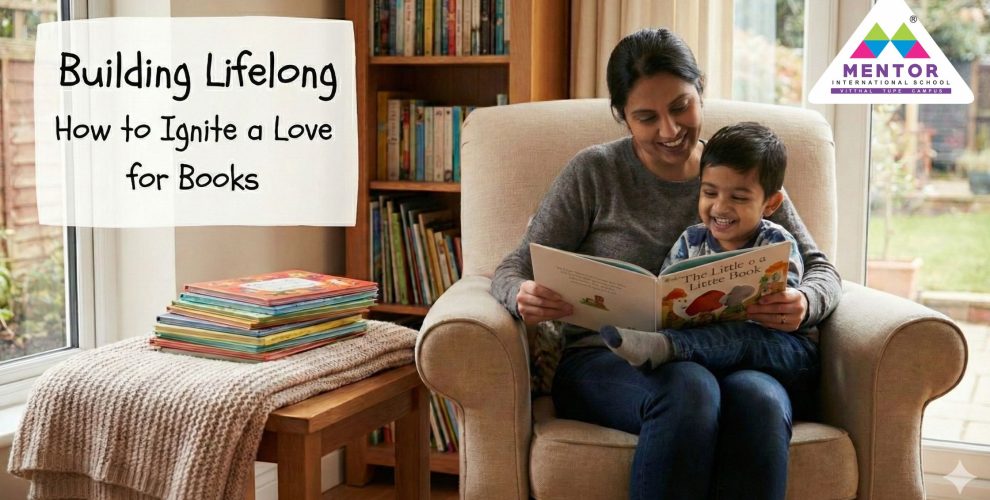
- Cuddle + Book = Magic. Physical closeness + story creates bonding and security.
- Same Book, Repeatedly. Babies love repetition. “Goodnight Moon” 50 times builds familiarity and confidence.
- Dramatic Voices and Sound Effects. Make it theater, not reading.
- Point and Name. Babies learn vocabulary when you label pictures together.
Environment Setup:
- Book Basket in Every Room. Always accessible, never “special.”
- Board Books Are Indestructible. Let them chew, throw, rip (replace as needed).
- Rhymes and Songs. Nursery rhymes build phonological awareness (hearing sounds in words).
Pro Tip: Never teach phonics to babies. Just expose them to rich language.
Ages 4-6: The Decoding Years (Learning to Read)
Goal: Crack the reading code while maintaining joy.
Phonics Done Right:
- Sound Games First: “What rhymes with cat?” before “Sound out this word.”
- Decodable Readers: Simple books with controlled vocabulary (“I see the cat. The cat sat.”).
- Sand Writing: Finger-trace letters in sand/tray for multisensory learning.
Maintaining Joy:
- Reading Levels, Not Tests. Never say, “You should be at Level X.” Celebrate progress.
- Choice Always. Let them pick books (even if “wrong” level).
- Reading Buddies. Pair with older students for modeling.
Red Flags to Watch:
- Letter/sound confusion (b/d, m/w)
- Avoiding reading aloud
- Fatigue after 5 minutes of reading
Ages 7-9: The Fluency Years (Reading to Learn)
Goal: Build speed, comprehension, and stamina.
Independent Reading Time (20 minutes daily):
- Silent, Sustained Reading. No talking, no distractions.
- Book Speed Dating. Weekly exposure to different genres.
- Reading Logs (Fun Version). Stickers, not word counts.
Comprehension Strategies:
- Before: “What do you think this book will be about?”
- During: “What surprised you so far?”
- After: “How has the main character changed?”
Genre Exploration:
- Graphic Novels Count. “Dog Man,” “Smile” build fluency.
- Nonfiction Passion. Let obsessions drive reading (dinosaurs, space, sports).
Ages 10-12: The Passion Years (Reading for Pleasure)
Goal: Hook them for life with irresistible series.
The Power of Series:
- Cliffhangers Create Addicts. “Percy Jackson,” “Harry Potter,” “Wings of Fire.”
- Predictable Progression. Same universe, growing complexity.
Deep Reading Skills:
- Book Clubs. Peer discussion deepens understanding.
- Author Studies. Read multiple books by same author.
- Fan Fiction. Writing their own stories shows mastery.
Dystopian Gateway: “Hunger Games,” “Divergent” hook reluctant readers.
Ages 13+: The Critical Years (Reading for Identity)
Goal: Connect reading to real-world issues and identity.
Young Adult Literature:
- Identity Exploration: “The Hate U Give,” “Simon vs. the Homo Sapiens Agenda.”
- Social Issues: “Long Way Down,” “All American Boys.”
- Complex Narratives: “The Book Thief,” “Life of Pi.”
Independent Projects:
- TED Talks from Books. Students present book insights.
- Podcasts/Book Reviews. Students become influencers.
Part 3: The Mentor International School Literacy Program
At Mentor International School, reading is not a subject. It is the foundation of our entire curriculum.
Mini-Lesson (10 min): Teach one strategy (visualizing, questioning, predicting).
Independent Reading (30 min): Students read self-selected books at their level.
Conferring (ongoing): Teachers meet individually with students.
Share (10 min): Students share insights with peers.
The Library as Third Classroom
- 14,000+ Books across all reading levels and interests.
- Genre Zones: Easy navigation, visual appeal.
- Cozy Reading Nooks: Bean bags, tents, fairy lights.
- Librarian-Led Book Talks: Weekly recommendations.
Reading Challenges (Fun, Not Pressure)
- 100-Book Club: Not 100 chapter books—picture books count.
- Genre Bingo: Try new types, mark off squares.
- Buddy Reading: Pre-Primary reads to Grade 8.
Assessment That Doesn’t Kill Joy
- Running Records: Track accuracy, fluency, comprehension.
- Reading Conferences: Qualitative discussions, not tests.
- Student-Led Conferences: Child explains their reading life.
Tiered Support:
- Tier 1: All students get workshop + library.
- Tier 2: Small group phonics/comprehension for struggling readers.
- Tier 3: 1:1 intervention with reading specialist.
No “Dumb Groups”: Struggling readers work with peers at similar levels.
Part 4: Parenting Strategies – What You Can Do Tonight
- Bookshelves at Child Height. They see books as normal, not special.
- Family Reading Time. Everyone reads simultaneously, no talking.
- Books as Gifts. Birthdays, achievements = books.
- Magazine Subscriptions. Nonfiction for bathrooms/bedtime.
Every night, 20 minutes, no exceptions. Babies to teens.
Why it works: Builds habit, models enthusiasm, creates bonding ritual.
- Reading Before Screens. Book first, iPad second.
- Audiobooks Count. Long car rides = Harry Potter.
- Reading Lights. Read under covers if needed.
Instead of “How was school?” ask:
- “What’s the best book your friend is reading?”
- “What surprised you in your book today?”
- “Who would you cast in a movie of your book?”
- First Chapter Book Party. Cake, certificate, friends.
- 100-Book Club Pin. Wearable pride.
- Finished Series Marathon. All-day reading fest.
Part 5: Troubleshooting Common Problems
Diagnosis: Usually fear of failure or lack of access to right books.
Solutions:
- Let Them Pick. Even “trashy” books are better than no books.
- Graphic Novels. “Captain Underpants,” “Amulett.”
- Audiobooks + Follow Text. Ear + eye = double reinforcement.
- Read TO Them. Teens still love hearing stories.
“My Child Only Wants One Series”
Perfect. Deep reading of familiar authors builds fluency.
Transition Strategy: Find “read-alikes” (similar authors/series).
Log Cheating: Stop paper logs. Trust + discuss books instead.
Motivation Check: Are rewards killing intrinsic motivation?
Comprehension Issue: Teach strategies (visualizing, questioning).
Motivation Issue: Find their passion (sports books, horror, manga).
“English Isn’t Our First Language”
Perfect. Research shows bilingual kids become better readers.
Strategy: Read in home language + English picture books.
Part 6: Reading Lists by Age and Interest
- Pete the Cat series (repetition mastery)
- Elephant & Piggie (dialogue practice)
- Frog & Toad (friendship themes)
Ages 7-9 (Chapter Book Beginners)
- Magic Tree House (adventure + history)
- Ivy + Bean (relatable girl friendship)
- Dog Man (graphic novel gateway)
- Percy Jackson (mythology + action)
- Wings of Fire (fantasy dragon world)
- Who Was? series (biography gateway)
- Holes (mystery + friendship)
- Hatchet (survival + resilience)
- One of Us is Lying (mystery + social issues)
- Diary of a Wimpy Kid (boy humor)
- Dork Diaries (girl humor)
- Big Nate (comics + school stories)
- Panchatantra Tales (Indian wisdom stories)
- Grandma’s Bag of Stories (Sudha Murthy)
- Grandfather’s Stories (Ruskin Bond)
Part 7: Measuring Success – What to Look For
Forget test scores. Real reading success looks like:
Behavioral Indicators:
- Child carries book everywhere
- Asks for bookstore trips
- Talks about characters like real people
- Gets “lost” in books for hours
Cognitive Indicators:
- Uses new vocabulary naturally
- Makes connections between books and life
- Remembers details from books read months ago
- Prefers reading over screens (occasionally)
Social Indicators:
- Recommends books to friends
- Joins book discussions willingly
- Writes fan fiction or book reviews
- Starts own mini-library
Children who love reading become adults who:
- Learn faster (reading = fastest way to acquire knowledge)
- Earn more (vocabulary predicts income better than IQ)
- Lead better (empathy from fiction predicts leadership success)
- Live longer (reading 30 minutes daily adds years to life expectancy)
At Mentor International School, we don’t measure reading by exams. We measure by the child who stays up past bedtime “just one more chapter.” The child who argues passionately about a book’s ending. The child who starts every sentence with “This reminds me of the book…”
Your Assignment:
- Go to a bookstore/library tonight.
- Let your child pick 5 books (no veto power).
- Read aloud for 20 minutes before bed.
- Repeat daily. Forever.
The world will try to steal your child’s attention with endless digital distractions. You can give them something better: the power of stories, the magic of other worlds, the superpower of reading.
At Mentor International School, we partner with parents to create lifelong readers. Visit us in Hadapsar. See our library alive with excited children. Experience a school where reading isn’t taught—it’s lived.
Because the children who read will be the leaders tomorrow.
