

Holistic Education: Building Future-Ready Life Skills
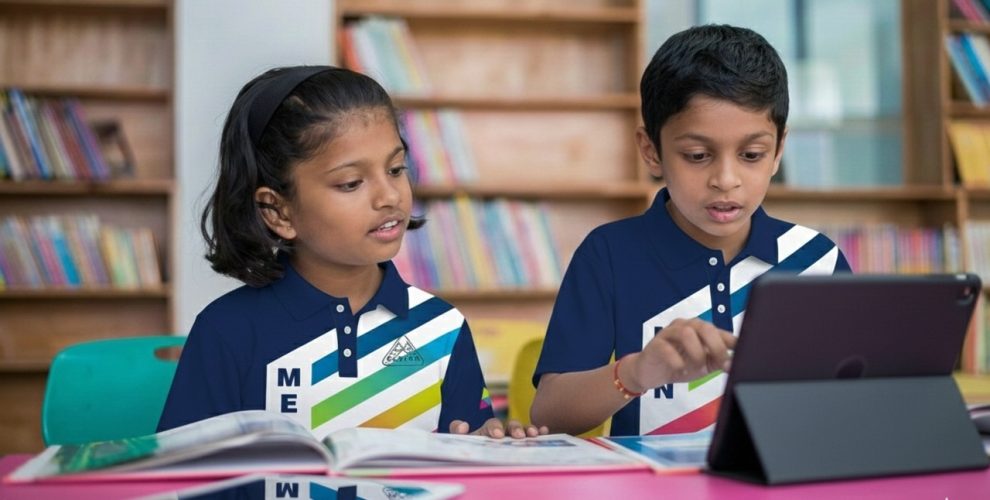
Education has historically been narrowly defined by academic achievement—test scores, grades, and subject mastery. Yet the world our children will inherit demands far more. The most successful individuals aren’t necessarily those with the highest IQs or test scores, but those who possess resilience, creativity, emotional intelligence, adaptability, collaboration skills, and the ability to think critically about complex problems. These capabilities emerge not from academics alone but from holistic education that develops the complete person across cognitive, emotional, social, physical, and ethical dimensions.
At Mentor International School in Hadapsar, we believe that true education prepares students for meaningful, successful lives—not just for examinations or careers, but for navigating complexity, contributing to communities, and finding purpose in an increasingly uncertain world. Our commitment to holistic education reflects our understanding that developing future-ready life skills requires intentional development across all dimensions of human growth.
Understanding Holistic Education
Holistic education represents a fundamental philosophical shift from traditional models that compartmentalize learning into separate subjects and focus primarily on cognitive development.
Holistic education recognizes that children are complete human beings with interconnected physical, emotional, social, creative, and spiritual dimensions. Rather than treating these as separate from academics, holistic approaches integrate them, understanding that all dimensions of development affect learning and wellbeing.
Holistic education develops the whole person—mind, body, heart, and spirit—preparing students for success not just in academics but in life. This approach encompasses:
- Academic excellence: Rigorous, conceptual learning that develops critical thinking and deep understanding
- Emotional intelligence: Understanding and managing emotions, developing empathy and self-awareness
- Social competence: Collaboration, communication, conflict resolution, and healthy relationships
- Physical wellbeing: Fitness, nutrition, sleep, stress management, and body awareness
- Creative expression: Artistic, musical, and imaginative capacities that unlock innovation
- Ethical development: Character, values, integrity, and commitment to social responsibility
- Practical life skills: Independence, resilience, time management, financial literacy, and adaptability
When all these dimensions develop together, students become capable, confident, and resilient individuals prepared for whatever futures they choose.
Why Holistic Education Matters Now
The world has fundamentally changed, and traditional education alone is insufficient for modern success. Consider what employers, universities, and society increasingly demand:
Critical thinking and problem-solving: Rather than recalling facts, modern work requires analyzing complex problems from multiple perspectives and generating creative solutions.
Collaboration and communication: Most meaningful work happens in teams; success depends on working effectively with diverse people and articulating ideas clearly.
Emotional intelligence: Managing stress, understanding others’ perspectives, providing constructive feedback, and maintaining healthy relationships are essential professional capabilities.
Adaptability and resilience: Rapid change means careers will shift multiple times; thriving requires comfort with uncertainty and ability to bounce back from setbacks.
Creativity and innovation: Competitive advantage comes from novel approaches, creative problem-solving, and seeing possibilities others miss.
Ethical judgment: As technology and business become more complex, individuals need strong ethical foundations to navigate moral ambiguities.
Self-direction and lifelong learning: With information changing constantly, success depends on self-motivation to continually learn and adapt.
Traditional academics alone develop only some of these capabilities. Holistic education intentionally develops all dimensions essential for future success.
Cognitive Development: Critical Thinking Beyond Memorization
While academics remain important, how they’re taught matters enormously for developing genuine critical thinking.
From Rote Learning to Conceptual Understanding
Traditional education often emphasizes memorization—students learn facts and procedures to reproduce on exams. While memory has value, this approach develops neither deep understanding nor the creative thinking required in modern workplaces.
Holistic education emphasizes conceptual understanding, helping students grasp the underlying principles rather than memorizing surface facts. For example, rather than memorizing quadratic formulas, students explore how different mathematical relationships function, when to apply them, and why they work.
When students understand concepts deeply, they can apply knowledge to new situations, adapt approaches to novel problems, and think creatively about possibilities—essential capabilities in careers where specific procedures constantly change but underlying principles remain constant.
Developing Problem-Solving Capabilities
Real-world problems rarely fit neatly into single disciplines or have predetermined solutions. Holistic education develops genuine problem-solving through:
- Project-based learning: Working on complex, real-world challenges that require research, collaboration, creativity, and critical evaluation
- Interdisciplinary approaches: Recognizing how problems connect across subjects—history informs understanding of current events, mathematics applies to science and design, literature explores human psychology
- Case study analysis: Examining real situations, decisions, and outcomes to understand complexity and tradeoffs
- Debate and discussion: Exploring multiple perspectives on complex issues, developing ability to construct and defend arguments while respecting alternative viewpoints
- Design thinking: Using structured processes to identify problems, generate solutions, prototype approaches, and iterate based on feedback
Students who develop through these approaches become independent thinkers capable of tackling novel challenges rather than dependent on having learned a specific procedure beforehand.
Information Literacy in the Digital Age
In an era of information overload and misinformation, distinguishing credible sources from unreliable ones is as essential as reading itself. Holistic education develops information literacy—the ability to:
- Evaluate source credibility: Assess author expertise, potential bias, evidence quality, and corroboration across sources
- Distinguish fact from opinion: Recognize claims supported by evidence versus interpretations or speculation
- Understand information bias: Recognize how algorithms curate what we see, how media outlets have different perspectives, and how our own biases affect information consumption
- Synthesize complex information: Connect information from multiple sources into coherent understanding
- Recognize propaganda and manipulation: Identify persuasion techniques used to influence thinking
Students with strong information literacy navigate the complex information environment thoughtfully rather than accepting or rejecting information uncritically.
Emotional Intelligence: The Foundation of Wellbeing
Emotional intelligence—understanding and managing emotions, empathizing with others, and navigating relationships—may be more important than IQ for success and wellbeing.
Self-awareness—understanding your own emotions, strengths, limitations, and values—is the foundation of emotional intelligence. Holistic education develops self-awareness through:
- Reflection practices: Regular opportunities to reflect on experiences, feelings, and learning
- Mindfulness and meditation: Developing awareness of thoughts and emotions without judgment
- Feedback and growth conversations: Teachers and peers providing constructive observations about impact and potential
- Arts and creative expression: Using creative media to explore and express emotions
- Goal-setting and progress tracking: Understanding personal strengths and areas for development
Students who know themselves well make better decisions, advocate for their own needs, and pursue paths aligned with their values rather than external pressure.
Building Empathy and Perspective-Taking
Empathy—understanding and sharing others’ feelings—is essential for healthy relationships and ethical decision-making. Holistic education develops empathy through:
- Literature and storytelling: Exploring human experiences through narratives that develop understanding of diverse perspectives
- Drama and role-playing: Taking on different characters’ perspectives and experiencing situations from varied viewpoints
- Community engagement: Direct interaction with people from different backgrounds and circumstances
- Service learning: Working to address community needs, developing understanding of others’ challenges and building connection
- Discussion and dialogue: Engaging with different perspectives in respectful, exploratory conversations
Students who develop strong empathy are better equipped for collaboration, leadership, and creating positive social change.
In increasingly stressful world, emotional regulation—the ability to manage emotions constructively—is essential for wellbeing and effectiveness. Holistic education teaches emotional management through:
- Stress management techniques: Practical tools including breathing exercises, progressive muscle relaxation, and physical activity
- Healthy coping strategies: Identifying and practicing approaches that help manage difficult emotions—journaling, creative expression, talking with trusted people, problem-solving
- Mindfulness practices: Developing awareness and acceptance of emotions without being controlled by them
- Physical wellness: Understanding how sleep, exercise, nutrition, and hydration affect emotional resilience
- Support systems: Building connections with people who listen and support during challenges
Students who manage emotions effectively maintain wellbeing, make better decisions, and respond constructively to challenges rather than reactive or destructive behaviors.
Social Competence: Collaboration and Communication
Most meaningful work occurs within teams; success depends on ability to collaborate effectively, communicate clearly, and navigate relationships.
Developing Collaboration Skills
True collaboration requires more than simply working alongside others—it requires genuine teamwork where individuals contribute strengths while supporting each other’s growth. Holistic education develops collaboration through:
- Group projects: Working together toward shared goals, learning to coordinate efforts and leverage different strengths
- Team sports and ensemble performance: Coordinating individual efforts toward team success, understanding that individual excellence serves collective goals
- Peer learning: Explaining concepts to classmates, receiving peer feedback, and learning from each other’s perspectives
- Leadership rotations: Different students taking leadership roles in different situations, learning to contribute in multiple ways
- Conflict resolution: Addressing disagreements constructively, finding solutions that serve the group’s interests
Students who develop collaboration skills are valuable team members capable of working effectively across differences.
Strengthening Communication Skills
Clear, thoughtful communication is essential for success in virtually any field. Holistic education develops communication across multiple modes:
- Public speaking: Presenting ideas confidently to audiences of various sizes
- Written communication: Clearly articulating ideas in essays, reports, creative writing, and digital formats
- Active listening: Listening to understand rather than simply waiting to respond
- Nonverbal communication: Understanding how body language, facial expressions, and tone affect message reception
- Persuasive communication: Constructing compelling arguments and presenting information effectively
- Digital communication: Using technology appropriately for different contexts and audiences
Students who communicate effectively are better understood, more influential, and better equipped to collaborate and lead.
Building Healthy Relationships
Quality relationships significantly impact mental health, happiness, and success. Holistic education supports relationship development through:
- Safe, supportive school environment: Creating communities where students feel valued and belong
- Peer mentoring: Older students supporting younger ones, building connection and responsibility
- Inclusive activities: Ensuring all students can participate and find belonging
- Social-emotional learning: Teaching skills for making friends, navigating conflicts, and maintaining relationships
- Teacher relationships: Building strong connections with adults who know, care about, and support student growth
Students who develop healthy relationships have support systems, feel valued, and are better equipped to handle life’s challenges.
Physical Development and Wellness
Physical health directly impacts cognitive function, emotional wellbeing, and overall quality of life—yet often receives insufficient attention in traditional education.
Building Lifelong Fitness Habits
Physical activity should feel joyful rather than punitive, something students continue throughout lives. Holistic education develops fitness through:
- Diverse physical activities: Sports, dance, yoga, martial arts, outdoor recreation ensuring all students find activities they enjoy
- Intrinsic motivation: Focusing on how movement feels rather than external metrics like winning or achieving particular levels
- Lifetime skills: Teaching activities students can continue throughout their lives—walking, swimming, cycling, hiking
- Fitness understanding: Learning how exercise benefits physical and mental health, understanding cardiovascular fitness, strength, flexibility, and balance
- Personal goal-setting: Each student pursuing meaningful fitness goals rather than comparing to peers
Students who develop positive relationships with physical activity establish patterns supporting lifelong health.
Developing Nutritional Literacy
In world of processed foods and confusing nutrition information, understanding healthy eating is essential. Holistic education develops nutritional awareness through:
- Nutrition education: Understanding macronutrients, reading nutrition labels, recognizing marketing misleading health claims
- Practical cooking skills: Preparing healthy meals, understanding kitchen basics, cooking from scratch
- Growing food: School gardens providing hands-on understanding of food production, nutrition, and sustainability
- Cultural food appreciation: Understanding how different cultures approach nutrition, valuing diverse food traditions
- Mindful eating: Developing awareness of hunger, satiety, emotional eating, and finding nourishment in food
Students with nutritional literacy make informed choices supporting health throughout their lives.
Sleep and stress management are essential for physical health, mental wellbeing, and academic performance—yet many students struggle with both. Holistic education supports healthy sleep and stress management through:
- Sleep education: Understanding sleep cycles, sleep hygiene, and importance of adequate rest
- Stress management techniques: Teaching practical approaches for managing academic pressure and life stress
- Balanced schedules: Ensuring school workload doesn’t prevent adequate sleep or leisure
- Technology boundaries: Supporting healthy technology habits that don’t interfere with sleep
- Physical activity: Regular exercise reducing stress and supporting quality sleep
- Mindfulness and relaxation: Teaching meditation, breathing exercises, and relaxation techniques
Students who manage sleep and stress effectively maintain better health and are better equipped to handle life’s challenges.
Creative Development: Unlocking Innovation
Creativity—the ability to generate novel ideas and see possibilities others miss—is increasingly valued in modern workplaces and essential for personal fulfillment.
Arts aren’t luxuries but essential dimensions of education that develop creative thinking, emotional expression, and cognitive skills. Holistic education integrates arts through:
- Visual arts: Painting, sculpture, photography, design developing visual-spatial thinking and creative expression
- Music: Singing, playing instruments, music theory developing auditory discrimination and creative expression
- Drama: Acting, playwriting, theatrical production developing communication skills and empathy
- Dance: Movement, choreography, dance performance developing body awareness and creative expression
- Creative writing: Poetry, fiction, storytelling developing language skills and imaginative thinking
Students who engage with arts develop creative confidence and multiple modes of expression and thinking.
Fostering Creative Problem-Solving
Creativity isn’t limited to arts but essential across all fields. Holistic education develops creative thinking through:
- Open-ended projects: Problems with multiple possible solutions, encouraging creative approaches
- Brainstorming and ideation: Generating multiple possibilities before evaluating and refining
- Design thinking: Using structured processes to develop solutions to real problems
- Failure as learning: Creating psychological safety where experimentation and failure are valued as part of learning
- Diverse perspectives: Exposure to different ways of thinking and solving problems
- Making and building: Hands-on creation developing spatial reasoning and creative thinking
Students who develop creative confidence approach problems from multiple angles, generate novel solutions, and innovate throughout their careers.
Ethical Development: Character and Values
How we treat others and what we stand for matter as much as what we achieve. Holistic education intentionally develops character and ethical thinking.
Strong character is built on clear values and ethical thinking. Holistic education develops ethical awareness through:
- Literature and history: Exploring moral dilemmas and how people navigate ethical challenges
- Current events discussions: Examining real-world situations involving ethical dimensions
- Service learning: Engaging with community needs, developing understanding of social responsibility
- Ethics classes: Explicitly exploring questions of fairness, justice, honesty, and how to act ethically
- Role modeling: Teachers and mentors demonstrating ethical behavior and decision-making
Students who develop ethical thinking navigate moral complexity thoughtfully and act according to their values.
Building Integrity and Accountability
Integrity—doing the right thing even when no one is watching—is foundation of character. Holistic education builds integrity through:
- Clear expectations: Understanding behavior expectations and why they matter
- Natural consequences: Experiencing outcomes of choices, understanding how actions affect others
- Restorative practices: When mistakes happen, focusing on learning and repair rather than punishment
- Honest reflection: Regularly examining choices and growth areas
- Authentic relationships: Teachers and peers who know students well and help them stay accountable to their values
Students who develop strong integrity are trustworthy and reliable, making positive contributions to communities.
Developing Social Responsibility
Education in holistic framework includes understanding one’s responsibility to broader communities and world. Holistic education develops social responsibility through:
- Community service: Active participation in addressing community needs
- Environmental education: Understanding environmental challenges and personal responsibility
- Social awareness: Learning about diverse perspectives, social inequalities, and social justice issues
- Leadership opportunities: Taking on roles that benefit the community
- Global awareness: Understanding interconnectedness and global challenges
Students with strong social responsibility work toward creating positive change in their communities and world.
Practical Life Skills: Independence and Resilience
Beyond academics and character, holistic education develops practical capabilities enabling independence and effectiveness in daily life.
Most young people reach adulthood without understanding personal finances—a gap with serious consequences. Holistic education develops financial competency through:
- Basic economics: Understanding money, supply and demand, inflation, interest
- Personal budgeting: Learning to plan spending, save, and make financial decisions
- Banking and credit: Understanding how banks work, credit systems, and debt
- Investing basics: Introducing concepts of saving and investing for future
- Avoiding financial pitfalls: Understanding scams, predatory lending, and risky financial behaviors
- Entrepreneurship: Exploring how businesses create value and generate income
Students with financial literacy make informed decisions about money and build secure financial futures.
Time Management and Organization
Managing time effectively is essential for academic success and life effectiveness. Holistic education develops these skills through:
- Planning and prioritization: Learning to prioritize among competing demands and plan accordingly
- Goal-setting: Setting meaningful goals and breaking them into manageable steps
- Organization systems: Developing systems for managing materials, information, and commitments
- Managing distractions: Understanding digital distractions and developing strategies to maintain focus
- Reflection and adjustment: Regularly evaluating time use and adjusting approaches
Students who manage time effectively accomplish more with less stress and maintain better balance.
Independence and Self-Advocacy
Young people prepared for adult life can advocate for themselves, solve problems independently, and seek help when needed. Holistic education develops independence through:
- Gradual responsibility: Progressively increasing student autonomy and responsibility
- Problem-solving support: Teaching how to identify problems and generate solutions
- Self-advocacy skills: Learning how to ask for help, explain needs clearly, and negotiate
- Seeking help appropriately: Understanding when and how to ask for assistance
- Decision-making practice: Making real choices and experiencing consequences, learning from outcomes
Students who develop independence are prepared to navigate adult challenges confidently.
Resilience—bouncing back from setbacks and persisting through challenges—is perhaps most important life skill. Holistic education builds resilience through:
- Growth mindset: Helping students understand that abilities develop through effort and that challenges build capability
- Manageable challenges: Providing tasks slightly beyond current ability, supporting students in stretching and growing
- Failure and recovery: Creating environments where failure is normal and valued as learning opportunity
- Support systems: Ensuring students have adults and peers who support and encourage them
- Meaning and purpose: Helping students connect their efforts to meaningful goals
- Celebrating effort: Recognizing and valuing progress and persistence, not just final outcomes
Students who develop strong resilience persist through difficulties and ultimately succeed at challenging goals.
Mentor International School’s Holistic Approach
At Mentor International School in Hadapsar, holistic education is not an add-on but central to everything we do. Our commitment to whole-child development reflects our belief that education’s purpose is developing capable, compassionate, resilient individuals prepared for meaningful success.
Beyond academics, our curriculum intentionally develops all dimensions of student growth:
- Academic rigor with conceptual focus: Deep learning that develops critical thinking and understanding, not just memorization
- Integrated arts: Visual arts, music, drama, and creative expression woven throughout the curriculum
- Physical education and wellness: Regular physical activity, yoga, nutrition education, and stress management
- Social-emotional learning: Explicit instruction and practice in emotional intelligence, collaboration, and healthy relationships
- Ethics and character education: Exploring values, integrity, social responsibility, and ethical thinking
- Practical life skills: Financial literacy, time management, digital citizenship, and independence development
- Community engagement: Service learning and community involvement developing social responsibility
The environment we create directly impacts learning and development:
- Supportive community: Creating spaces where students feel valued, belong, and are safe taking risks
- Diversity and inclusion: Celebrating differences and ensuring all students feel welcomed
- Teacher relationships: Building strong connections where teachers know students well and support whole-person development
- Collaborative learning: Emphasizing teamwork, cooperation, and peer learning
- Growth mindset culture: Celebrating effort and progress, viewing challenges as learning opportunities
- Balance and wellbeing: Protecting adequate sleep and leisure, preventing burnout
We recognize that developing the whole child requires partnership with families:
- Regular communication: Keeping families informed about academic progress, character development, and overall wellbeing
- Parent engagement: Involving families in school community and supporting consistent approaches at home
- Family resources: Providing workshops and resources supporting parent understanding of child development
- Celebrating growth: Recognizing development across all dimensions, not just academic achievement
Looking Forward: Preparing for Uncertain Futures
We cannot predict precisely what careers students will pursue or challenges they’ll face, but we can prepare them with capabilities enabling adaptation and success whatever the future holds.
The most future-ready individuals aren’t those with specific technical knowledge but those with:
- Strong critical thinking and problem-solving: Able to address novel challenges
- Emotional intelligence and collaboration: Able to work effectively with diverse people
- Creativity and innovation: Able to generate novel solutions and see possibilities
- Adaptability and resilience: Able to handle change and bounce back from setbacks
- Ethical foundation and social responsibility: Able to navigate complexity with integrity
- Lifelong learning orientation: Able to continuously learn and develop
Holistic education develops exactly these capabilities.
Conclusion: Education for Meaningful Success
True success isn’t measured only by test scores or career achievement but by wellbeing, meaningful relationships, contribution to communities, and living aligned with values. Holistic education recognizes this deeper understanding of success and intentionally develops the complete person.
At Mentor International School in Hadapsar, we are committed to holistic education that prepares students not just for the next examination or competitive college admission, but for lives of meaning, purpose, and positive impact. Our comprehensive approach recognizes that:
- Academic excellence matters, but character matters more!
- Individual achievement is important, but collaboration and community are essential !
- Knowledge is valuable, but wisdom and judgment are crucial !
- Preparing for careers is necessary, but preparing for meaningful lives is the real goal !
When families choose Mentor International School, they choose an institution committed to developing the complete person—academically capable yet emotionally intelligent, individually talented yet collaboratively skilled, academically successful yet characterfully strong, prepared for careers yet grounded in purpose and values.
We invite you to visit Mentor International School and experience how we integrate academic excellence with Every-child development 360 . Our classrooms, our community, and our commitment demonstrate that education can and should prepare students for future-ready lives of meaning, contribution, and flourishing.
Contact Mentor International School today to learn more about how our holistic approach can support your child’s development into a capable, compassionate, resilient individual prepared to thrive in whatever futures they create.
