

Ways Parents Can Build Scientific Thinking at Home| See how our CBSE Schools In hadapsar capabilities are committed to nurturing scientific thinking !
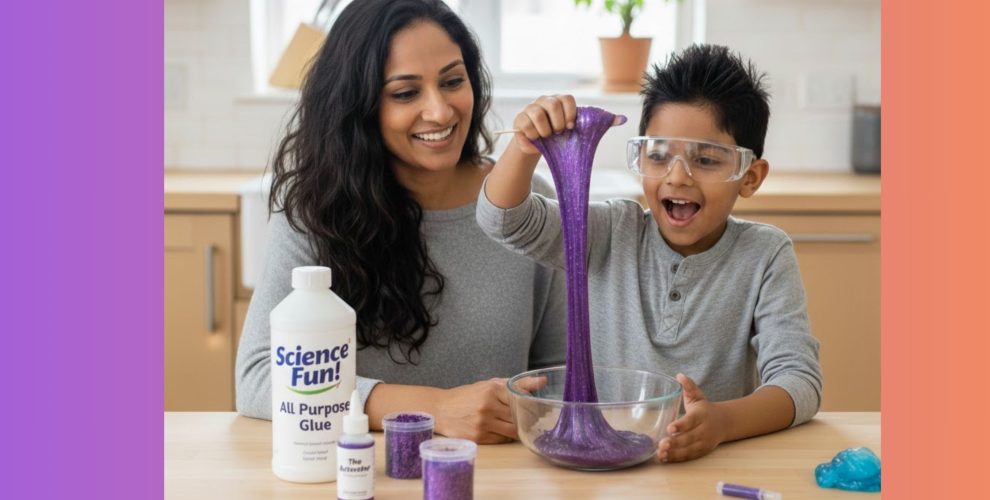
As parents, one of the greatest gifts we can give our children is the ability to think scientifically—not necessarily to become scientists, but to approach the world with curiosity, ask meaningful questions, observe carefully, think critically, and solve problems methodically. Scientific thinking isn’t confined to laboratories or classrooms; it’s a mindset that can be cultivated through everyday interactions, household activities, and intentional parenting approaches that turn ordinary moments into extraordinary learning opportunities.
At Mentor International School in Hadapsar, we recognize that children’s scientific curiosity and analytical capabilities develop most powerfully when home and school work in partnership. While we provide structured science education in our classrooms, the foundation for scientific thinking is often laid at home through parental encouragement, environmental exploration, and the freedom to question, experiment, and discover.
Understanding Scientific Thinking
Before exploring practical strategies, it’s important to understand what scientific thinking actually means and why it matters.
What Is Scientific Thinking?
Scientific thinking is a systematic approach to understanding the world through observation, questioning, hypothesis formation, experimentation, and evidence-based reasoning. It encompasses several interconnected skills:
Curiosity and questioning: Wondering how things work and asking thoughtful questions about the world.
Observation skills: Noticing details, patterns, and changes in the environment.
Hypothesis formation: Making educated guesses about cause-and-effect relationships based on prior knowledge.
Experimentation: Testing ideas through controlled exploration and investigation.
Data collection and analysis: Gathering information systematically and looking for patterns.
Critical evaluation: Assessing evidence objectively and drawing reasonable conclusions.
Adaptability: Revising understanding when new evidence contradicts previous beliefs.
Why Scientific Thinking Matters
Children who develop strong scientific thinking capabilities benefit across all areas of life, not just in science classes:
Academic success: Scientific thinking underlies success in mathematics, reading comprehension, social studies, and virtually all academic disciplines requiring analysis and reasoning.
Problem-solving: The ability to approach challenges systematically, break complex problems into manageable parts, and test potential solutions applies to countless life situations.
Critical thinking: In an era of misinformation and persuasive marketing, the ability to evaluate evidence critically and distinguish fact from opinion is essential.
Creativity and innovation: Scientific thinking involves imagining possibilities, designing experiments, and finding novel solutions—all key components of creativity.
Confidence and resilience: Children who approach challenges as “experiments” rather than tests of their worth develop greater resilience when facing setbacks.
Career readiness: Even careers outside traditional STEM fields increasingly require analytical thinking, data literacy, and problem-solving capabilities.
Creating a Home Environment That Encourages Scientific Thinking
The foundation for building scientific thinking begins with the environment and culture you create at home.
Embrace the ‘Question Monster’
Remember when your toddler went through the phase of asking “Why?” about everything? That wasn’t annoying—it was scientific thinking in action. Rather than discouraging questions or providing quick answers to end the conversation, nurture that curiosity:
Welcome all questions: Create a family culture where any question is valued, no matter how simple or complex.
Model curiosity yourself: Ask questions aloud: “I wonder why the sky looks different colors at different times?” “Why do you think plants grow toward the window?”
Create a ‘Question of the Day’ jar: Family members contribute questions, and you explore one together each day or week.
Avoid immediate answers: When your child asks a question, respond with “That’s a great question! What do you think?” or “How could we find out?” This shifts them from passive recipients to active investigators.
Research together: When you don’t know the answer, model the process of seeking reliable information rather than guessing or making up responses.
Set Up an Observation Station
Dedicate a space in your home for close observation and exploration:
Basic equipment: Magnifying glass, simple microscope, rulers, collection containers, notebooks for recording observations.
Rotating exhibits: Natural objects like leaves, rocks, flowers, insects (in containers), feathers, shells—things your child can examine closely.
Encourage detailed observation: Ask your child to describe what they see in specific terms—colors, textures, patterns, shapes, sizes, changes over time.
Draw what you see: Drawing requires careful observation and helps children notice details they might otherwise miss.
Make Mess-Making Acceptable
Scientific exploration is inherently messy. Children who fear messes or consequences become overly cautious, inhibiting genuine exploration:
Designate experiment spaces: Create areas where mess is acceptable—kitchen tables covered with newspaper, outdoor spaces, bathroom sinks.
Provide cleanup materials: Make cleanup part of the process rather than a consequence, teaching responsibility alongside exploration.
Celebrate productive mess: Distinguish between purposeful experimental mess and destructive chaos, valuing the former while setting boundaries around the latter.
Everyday Activities That Build Scientific Thinking
The most powerful learning happens through everyday activities rather than elaborate special projects.
Kitchen Science: Cooking and Baking
Your kitchen is a natural laboratory where chemistry, physics, and biology converge:
Involve children in cooking: Let them measure ingredients (mathematics), observe how heat changes food (chemistry), watch dough rise (biology), and see how mixing creates new substances.
Ask predictive questions: “What do you think will happen when we add yeast to warm water?” “Why do you think the recipe says to beat the eggs?”
Explore variables: Try baking cookies at different temperatures or with different amounts of ingredients, discussing how changes affect outcomes.
Observe transformations: Notice how eggs change from liquid to solid when cooked, how sugar dissolves in water, how bread dough expands.
Simple experiments: Make rock candy to learn about crystal formation, create “volcanic” eruptions with baking soda and vinegar, explore density by layering liquids of different densities.
Nature Walks and Outdoor Exploration
Nature provides endless opportunities for scientific observation and questioning:
Regular nature walks: Visit the same location regularly, observing how it changes across seasons, weather conditions, and times of day.
Collect and examine: Gather leaves, rocks, seeds, flowers (where permitted), examining them closely and comparing characteristics.
Ask open-ended questions: “Why do you think this tree’s leaves are different from that one?” “What do you notice about where we find different insects?”
Track changes over time: Plant seeds and observe growth stages, watch clouds and predict weather, observe the moon’s phases, track bird migration or seasonal changes.
Encourage sensory engagement: Beyond sight, engage other senses (where safe)—how things sound, smell, feel.
Water Play and Physics Exploration
Water provides accessible opportunities for exploring fundamental physics concepts:
Sink and float experiments: Gather various household objects and predict which will sink or float, then test and discuss why.
Volume and displacement: Pour water between containers of different shapes, observing that volume remains constant. Drop objects into full containers, measuring displaced water.
Water movement: Explore how water flows, how you can redirect it, how it behaves differently at different temperatures.
Ice experiments: Freeze water with different substances (food coloring, small toys, salt), observing melting patterns and rates.
Surface tension: Float paperclips on water, add dish soap to see surface tension break, observe water droplets on different surfaces.
Building and Engineering Challenges
Construction activities develop spatial reasoning, problem-solving, and engineering thinking:
Bridge building: Using popsicle sticks, straws, or paper, design bridges that can support weight, testing different designs.
Tower challenges: See how tall a structure you can build with blocks, cups, or cards before it falls, discussing stability and balance.
Ramp experiments: Create ramps at different angles, rolling various objects down them to explore how angle and surface texture affect speed and distance.
Paper airplanes: Design different plane models, testing which fly farthest or straightest, modifying designs based on results.
Simple machines: Explore pulleys, levers, and wheels using household items, observing how they make work easier.
Simple Home Experiments That Spark Scientific Thinking
While everyday activities are most important, occasional structured experiments make science exciting and memorable.
Growing Experiments
Plant growth provides ongoing opportunities for observation and learning:
Seed germination: Plant seeds in clear containers so roots and stems are visible. Try identical seeds in different conditions—varying light, water, or soil—to explore what plants need.
Kitchen regrowth: Place vegetable scraps (lettuce bases, carrot tops, green onions) in water, observing regrowth over days and weeks.
Crystal growing: Create saturated salt or sugar solutions, allowing crystals to form over days, learning about evaporation and crystallization.
Chemical Reactions
Simple chemistry experiments demonstrate how substances interact:
Volcano eruption: The classic baking soda and vinegar reaction teaches about acids, bases, and gas production while providing dramatic results that engage children.
Color mixing: Explore how primary colors combine to create secondary colors, learning that substances mixing can create entirely new properties.
Invisible ink: Write with lemon juice, then heat the paper to reveal the message, exploring oxidation.
Dancing raisins: Drop raisins in carbonated water, watching them rise and fall as carbon dioxide bubbles attach and release.
Light and Optics
Light experiments develop understanding of physics principles:
Rainbow creation: Use prisms or create rainbows by spraying water in sunlight, learning how white light contains multiple colors.
Shadow experiments: Use flashlights to explore how shadow size changes with distance, how multiple light sources create multiple shadows, and how opaque vs. transparent materials affect shadows.
Reflection exploration: Use mirrors to redirect light, create mirror mazes, or explore how curved surfaces distort reflections.
Density and States of Matter
Exploring physical properties builds foundational understanding:
Density towers: Layer liquids of different densities (honey, dish soap, water, oil, rubbing alcohol) in clear containers, observing how they remain separate.
Ice and melting: Freeze water in various containers, then explore melting rates in different conditions—adding salt, varying temperature, different surface areas.
Oobleck: Mix cornstarch and water to create a non-Newtonian fluid that behaves as both liquid and solid, exploring states of matter.
Developing the Scientific Method Through Daily Life
The scientific method isn’t just for formal experiments—it’s an approach to everyday problem-solving.
Teaching the Process
Help your child approach situations scientifically:
Question: “I wonder why…” or “What would happen if…”
Hypothesis: “I think… because…”
Experiment: “Let’s try it and see…”
Observe: “What’s happening? What do you notice?”
Analyze: “Why do you think that happened?”
Conclude: “What did we learn?”
Refine: “How could we test this differently?”
Real-Life Application
Apply this process to everyday situations:
Finding lost items: “Where did you last see your shoes? Let’s retrace your steps and look in likely places.”
Solving problems: “The plant looks droopy. What might it need? How can we test whether water helps?”
Making decisions: “We want cookies to be softer. What ingredient might change that? How could we test it?”
Encouraging Scientific Documentation
Recording observations and experiments reinforces scientific thinking and develops literacy and communication skills.
Science Journals
Provide notebooks where children record:
- Questions they want to explore
- Predictions before experiments
- Observations during activities
- Drawings of what they see
- Results and conclusions
- New questions that emerge
For younger children, provide opportunities to draw pictures and dictate observations you write down.
For older children, encourage detailed written descriptions, data tables, and graphs.
Photo Documentation
Take photos of experiments and projects, creating visual records that children can review and share. This documentation helps them remember sequences, notice changes over time, and communicate their discoveries to others.
Building Critical Evaluation Skills
Scientific thinking requires assessing information objectively rather than accepting claims uncritically.
Teaching Media Literacy
Help your child evaluate information sources:
Question sources: “Who created this? What are their qualifications? Do they have biases?”
Verify claims: “How do they know this? What evidence supports it? Can we find corroboration?”
Distinguish fact from opinion: “Is this something we can observe and measure, or is it someone’s interpretation?”
Recognize persuasion techniques: Help children understand how advertisements, clickbait, and emotional manipulation work.
Model Critical Thinking
Demonstrate skeptical yet open-minded thinking:
- Question claims you encounter in media
- Admit when you don’t know something
- Change your mind when presented with good evidence
- Seek multiple perspectives on complex issues
Connecting with the Broader Scientific World
Expand scientific thinking beyond your home.
Visit Science-Rich Environments
Take advantage of local resources:
- Science museums with hands-on exhibits
- Planetariums and observatories
- Botanical gardens and nature centers
- Zoos and aquariums
- Natural history museums
- University science open houses
Leverage Online Resources
Quality science content abounds online:
- Educational YouTube channels (SciShow Kids, Crash Course Kids, National Geographic Kids)
- Science podcasts for children
- Virtual museum tours and exhibits
- Interactive science websites and simulations
Always co-view and discuss, helping children process information and ask questions.
Connect with Scientists
Humanize science by meeting scientists:
- Attend science talks or lecture series
- Participate in citizen science projects
- Invite family members or friends in scientific fields to share their work
- Attend science festivals or STEM fairs
Overcoming Common Challenges
Parents often encounter obstacles when fostering scientific thinking.
“I Don’t Know Enough Science”
You don’t need to be an expert. Your role is facilitating exploration, not providing all answers:
- Learn alongside your child
- Model how to find reliable information
- Focus on the process of discovery rather than having answers
- Value questions over answers
“We Don’t Have Time or Money”
Scientific thinking doesn’t require expensive equipment or extensive time:
- Integrate science into existing activities (cooking, walks, bath time)
- Use common household materials for experiments
- Focus on observation and questioning throughout daily routines
- Quality matters more than quantity—even 15 minutes of focused exploration has value
“My Child Isn’t Interested in Science”
Every child is curious about something:
- Find the scientific angle in their interests (sports involve physics, art involves chemistry, music involves mathematics and acoustics)
- Make it playful and exploratory rather than educational
- Follow their questions rather than imposing topics
- Celebrate their discoveries enthusiastically
Mentor International School’s Partnership with Families
At Mentor International School in Hadapsar, we believe that scientific thinking develops most powerfully through school-home partnership.
Our Approach
We provide structured science education that:
- Develops conceptual understanding through hands-on investigation
- Teaches the scientific method explicitly
- Encourages questioning and exploration
- Values process as much as results
- Integrates science across subjects
Supporting Home Learning
We partner with families through:
- Sharing science topics being explored in class
- Suggesting related home activities
- Providing resources for continued exploration
- Celebrating home science projects
- Communicating about each child’s scientific development
Building Scientific Community
We create community around science through:
- Science fairs showcasing student investigations
- Family science nights with hands-on activities
- Guest speakers sharing scientific careers
- Field trips to science-rich environments
- Celebrating scientific curiosity and discovery
Conclusion: Every Parent Can Raise a Scientific Thinker
Building scientific thinking at home doesn’t require a science degree, expensive equipment, or elaborate experiments. It requires curiosity, patience, willingness to explore alongside your child, and consistent encouragement of questioning, observation, and evidence-based reasoning.
When you:
- Welcome questions rather than discouraging them
- Create opportunities for hands-on exploration
- Model curiosity and critical thinking
- Make observation and experimentation part of everyday life
- Celebrate discovery and learning from “failures”
You’re developing capabilities that will serve your child throughout their life—in academics, careers, and personal decision-making.
At Mentor International School in Hadapsar, a dedicated STEM lab facilitates student scientific curiously and analytical capabilities are committed to nurturing scientific thinking in our students while partnering with families to extend that learning into homes and communities. We invite you to visit our campus, experience our science programs, and discover how we can work together to develop your child’s natural curiosity into powerful scientific thinking capabilities.
Contact Mentor International School today to learn more about our approach to science education and how we support families in raising curious, analytical, scientifically literate children prepared to understand and shape the world around them.
