

Homework Without Tears: A Practical Guide for Parents and Students
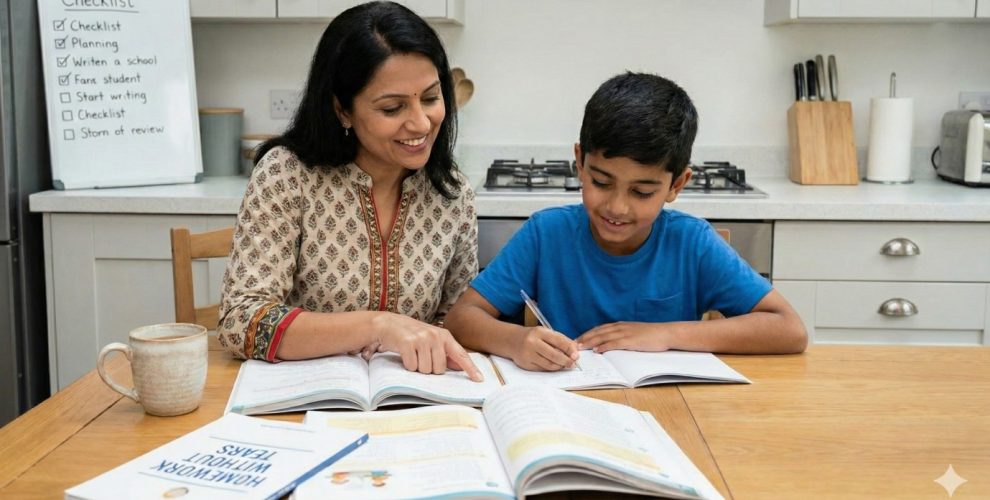
Introduction: When “Did You Finish Your Homework?” Starts a War
It’s 8:30 PM.
You’ve just finished a long day at work. Dinner is done, dishes are almost cleared, and you finally sit down when you notice your child still hasn’t opened their school bag.
You ask calmly, “Did you finish your homework?”
Silence.
Then: “I’ll do it later… It’s not that much… I’m tired… We didn’t get any today…”
Within minutes, the mood in the house changes:
- You’re frustrated and worried about their studies.
- Your child feels nagged, pressured, or overwhelmed.
- Homework time becomes a daily battlefield instead of a simple, predictable routine.
Many families repeat this pattern almost every evening. Some days it ends with unfinished work, some days with tears, and some days with parents giving in and doing part of the work themselves “just this once”.
But it doesn’t have to be this way.
Homework, when handled well, can:
- Reinforce what was taught in class
- Build independence and responsibility
- Help students manage time and deadlines
- Give parents a window into what their child is learning
- Quietly develop habits that will help them in higher classes and adult life
This blog is a practical, experience‑based guide to turning homework from a source of daily stress into a manageable, meaningful routine—for both students and parents. Whether your child is in primary or secondary classes, you’ll find ideas you can start using tonight.
Part 1: Why Do Schools Give Homework at All?
Before we “fix” homework, it helps to understand its real purpose. Children behave very differently when they believe something has meaning versus when they see it as pointless.
Good homework is meant to:
- Reinforce learning
Short, focused practice right after a lesson helps students strengthen what they learned before it fades. Just like sports or music, one coaching session is not enough; practice in between sessions makes skills stick. - Build habits and responsibility
Regular homework teaches children to handle small daily responsibilities: remembering tasks, bringing the right books, and finishing work within a time frame. These are the beginnings of self‑management. - Reveal gaps to teachers
Homework shows teachers where students are confused or need more support. If many students struggle with the same type of question, a good teacher knows it’s time to re‑teach or give more examples. - Involve parents in learning
Occasional home tasks allow parents to see what is being taught, what type of questions are asked, and where their child finds things easy or difficult. Homework can be a conversation starter, not just a task.
Homework is not supposed to:
- Punish students for misbehaviour
- Keep them busy for hours just to look “serious”
- Replace actual teaching in the classroom
- Steal all their free time, playtime, and sleep
When schools and families remember the real purpose, homework becomes lighter, smarter, and far more effective. Children also resist less when they understand that homework is practice designed to help them, not a punishment invented to trouble them.
You can even share this simple analogy with your child:
“Homework is to your brain what practice is to a cricket player or musician. Matches and concerts are like exams. Nobody becomes great by only playing matches and never practising.”
Part 2: The Most Common Homework Problems (And What’s Really Behind Them)
Every family thinks their homework challenges are unique, but most follow a few common patterns. Understanding the real reasons behind the behaviour is the first step toward changing it.
1. “My Child Procrastinates Till the Last Minute”
What you see:
- Child delays starting, even when they know there is work.
- Says “I’ll do it after this…” again and again.
- Finally rushes through everything late at night, often in a bad mood.
What might be behind it:
- The task feels too big or confusing, so they avoid it.
- They are mentally tired after school and need a break, not another demand.
- They fear failure (“What if I can’t do it?”), so they avoid starting.
- They have linked homework time with stress, scolding, or long lectures.
A child who procrastinates is often not “lazy” but overwhelmed or anxious. Breaking tasks into smaller steps and creating a predictable routine (instead of sudden orders) can reduce this type of avoidance.
2. “Homework Takes Forever”
What you see:
- A 20‑minute worksheet stretches into 2 hours.
- There are constant water breaks, toilet breaks, sudden hunger, and a hundred other distractions.
- You feel like homework is eating up the entire evening.
What might be behind it:
- No clear study space or routine; everything has to be searched, arranged, and negotiated each time.
- Too many distractions around (TV, phone, loud conversations, toys).
- Lack of focus because of tiredness or boredom.
- Genuine difficulty understanding the concept, so every question feels like climbing a mountain.
Sometimes, simply changing how and where homework happens can transform a slow, painful process into a smoother one.
3. “I Have to Sit Beside Them for Everything”
What you see:
- Child calls you for help at every small doubt.
- They won’t start unless you are physically sitting there.
- They depend on you to “check everything” and feel nervous if you don’t.
What might be behind it:
- Low confidence in their own ability to do work correctly.
- Habit of dependence: they’re used to an adult saving them if anything is hard.
- Fear of making mistakes or being scolded for wrong answers.
- Never having been taught step‑by‑step how to work independently.
Children don’t wake up one day knowing how to plan, start, and finish on their own. Independence is a skill that must be taught and gradually strengthened.
4. “We Fight Almost Every Day Because of Homework”
What you see:
- Nagging, arguing, sometimes shouting.
- Child may cry, sulk, walk away, or shut down completely.
- You end up feeling guilty and exhausted; they end up feeling discouraged.
What might be behind it:
- Homework has become mixed with emotions—fear, shame, pressure, and anger—rather than seen as a neutral task.
- Expectations are not clear or realistic for the child’s age.
- The child feels controlled or compared, not supported.
- Parents are carrying their own school memories (strict parents/teachers, fear of failure) into the situation.
The good news: these patterns are not fixed. With structure, empathy, and some deliberate changes, homework time can become calmer and more cooperative.
Part 3: Setting Up a Homework Routine That Actually Works
Children rarely say, “I can’t wait to do homework!” But they can definitely learn to accept and manage it without daily drama. The secret is routine plus environment.
Step 1: Choose a Regular Homework Time
Children feel safer when they know what to expect. Rather than deciding randomly every day, pick a homework time that fits your family schedule and stick to it.
Common options:
- After a short break and snack when they reach home
- After some outdoor playtime and before dinner
- For older students, one block in the late afternoon and another short block in the evening
The key:
- Homework time is fixed, even if some days there is very little to do. On lighter days, they can use the time to revise, read, or organise their notes.
- You don’t have to argue each day about when to start; that decision is already made.
You can say: “From 6:30 to 7:30 is study time on school days. After that, you’re free unless there is a big test.”
Step 2: Create a Distraction‑Free Homework Space
The environment silently tells the brain what to do. A clear, stable homework space signals “this is where we focus”.
Ideal features:
- A flat surface (table/desk) and a chair at the right height.
- Good lighting so they don’t strain their eyes.
- Essential supplies within reach: pencils, erasers, sharpener, ruler, colours, glue, etc.
- Minimal visual distractions: no TV, loud music, or ongoing adult conversations in the same room.
- For older students, phones and extra devices kept away unless needed for specific research.
It doesn’t have to be a separate room. A specific corner of the dining table, used consistently, is enough if it stays relatively quiet and organised during homework time.
You can even involve your child in setting it up: let them choose a pencil box, small desk organiser, or simple calendar to make it feel like “their” study zone.
Step 3: Use the “First, Then” Rule
Children respond better to structure than to repeated commands.
Instead of endless negotiating, use simple “First, then” statements:
- “First homework, then play.”
- “First 25 minutes of work, then a 10‑minute break.”
- “First today’s assignments, then TV.”
This is clear, firm, and predictable. Over time, children learn that homework is not optional; it is simply part of the rhythm of the day—like brushing teeth or having dinner.
Step 4: Break Work Into Small, Manageable Chunks
A big mixed list—“Maths + English + Science + project + reading”—can look scary. The brain doesn’t know where to begin, so it wants to avoid starting.
Help your child:
- Write down all tasks as a list.
- Estimate how long each will take (even roughly: 10 minutes, 20 minutes, etc.).
- Put a small box in front of each task to tick once done.
Then encourage them to start with one small item: “Let’s just finish this 10‑minute worksheet first.” Once they experience a quick win, they are more willing to continue.
For younger children, you can even draw three boxes: “Task 1, Task 2, Task 3,” and let them colour each box when done. Visual progress is very motivating.
Part 4: The 25–5 Method (For Focus Without Burnout)
Even adults struggle to concentrate for very long stretches. Expecting a child to sit silently for two hours straight is simply unrealistic.
The 25–5 method is a simple, powerful structure:
- 25 minutes: Full focus on one subject or task
- 5 minutes: Short break (stretch, walk, water, light snack, quick chat)
- Repeat this cycle 2–4 times depending on age and workload
Benefits:
- Children know a break is coming soon, so they are more willing to concentrate.
- Work feels less endless and more like a series of sprints.
- Breaks prevent frustration and mental tiredness, especially on heavy‑homework days.
For younger children (Classes 1–4), you can start with 15–5 or 20–5 and gradually increase as their stamina grows. The goal is not rigidity but a rhythm of focused work and genuine rest.
Important: Try to keep breaks screen‑free, especially for younger students. Screens can overstimulate the brain and make it harder to come back to quiet, focused work. Simple movements or a quick game with a stress ball work better.
Part 5: How Parents Can Help (Without Doing the Homework Themselves)
Parents often swing between two extremes:
- Doing too much (almost all the work), or
- Stepping back completely and then getting angry when the child struggles or fails.
The healthiest role is guide and coach.
1. At the Start of Homework
- Ask your child to show their notebook or homework diary.
- Help them read and understand the instructions, especially in lower classes.
- Ask: “What do you have to do first?” and let them answer in their own words.
- Help them plan the order of tasks: “Which will you do first, second, third?”
This first 5–10 minutes of planning can save 30–40 minutes of confusion later.
2. During Homework
- Stay nearby, especially for younger children, but avoid hovering over every line.
- If they ask for help, first ask: “What have you tried so far?” or “Show me where you got stuck.”
- Guide them with questions instead of giving direct answers:
- “Can you see a similar example in your book?”
- “What is this question really asking?”
- “What step comes next based on the example?”
If you’re constantly telling the answers, the homework is no longer their learning—it becomes your revision.
3. At the End of Homework
- Quickly check if all tasks listed are done and pages are labelled and dated.
- Check for basic neatness and effort; it does not have to look like a perfect sample book.
- Offer specific praise:
- “You handled that long science answer very well.”
- “I noticed you didn’t give up on that tough sum. That’s excellent.”
Avoid:
- Re‑writing things “neatly” yourself.
- Forcing them to erase and redo entire pages for small mistakes.
- Turning every small error into a lecture on “carelessness”.
Remember: homework is still practice. The classroom and teacher are there to correct and guide. Imperfect work is still valuable feedback.
Part 6: Encouraging Independence Step by Step
If your child is used to heavy parental involvement, you can’t suddenly say, “Now do everything alone.” They will naturally panic or resist.
Treat independence like training wheels on a bicycle—remove support gradually.
Phase 1: Side‑by‑Side Support
- You sit next to them for most of homework time.
- You help them read questions, organise books, and stay on track.
- You redirect their attention gently when they get distracted.
This phase suits younger children or those just starting a new, more demanding class.
Phase 2: Same Room, Less Direct Involvement
- You sit in the same room but not right beside them.
- You might be doing your own work, reading, or cooking while staying available.
- They try to solve things alone first and call you only if really stuck.
Here, they learn that they can think and try on their own, but you’re still nearby as a safety net.
Phase 3: End‑Check Only
- You ask, “What homework do you have today?” and let them list it.
- They complete most of it by themselves at the decided time.
- You check at the end for completeness and sign wherever required.
This is realistic for middle‑school students who have built some habits.
Phase 4: Full Ownership (With Occasional Guidance)
- The child maintains their own homework diary or uses the school app/portal.
- They start work at the fixed time, mostly without reminders.
- You intervene mainly if you notice repeated struggles or if the teacher alerts you.
This level is expected from older students (Classes 9–12), especially as board exams approach. It prepares them for college life, where parents and teachers aren’t constantly watching.
Remember: the transition between phases is not strictly linear. During exam periods or stressful weeks, it’s okay to temporarily offer a bit more support and then step back again.
Part 7: What Students Can Do to Make Homework Easier on Themselves
Children often feel they have no control over homework. Helping them see what they can do gives them a sense of power and responsibility.
You can even print or rewrite this as a colourful list for your child:
- Pack your bag properly after school
- Check the blackboard, notice board, or school app.
- Bring home all the required books, notebooks, and materials for the day’s tasks.
- A forgotten book wastes more time and causes more stress than the homework itself.
- Start with the hardest subject first (while your brain is fresh)
- Do the most challenging or least liked task at the beginning of homework time.
- Leave easier or favourite subjects for later when you’re more tired.
- Use a small task list and tick as you go
- Write: “1) Maths ex. 4 Q1–5, 2) English worksheet, 3) Science diagram.”
- Tick each item when done—this gives a sense of progress and satisfaction.
- Ask questions in class whenever you can
- Homework becomes much easier when you understand the concept in school itself.
- If you’re shy, ask the teacher after class or in a smaller group.
- Keep your phone and games away during homework time
- Even a “quick check” of messages can break your focus.
- The faster you finish with good focus, the more free time you’ll actually have.
- Don’t aim for perfection, aim for sincere effort
- Neat handwriting and correct answers are good goals, but fear of mistakes shouldn’t stop you from trying.
- Your teacher is there to help you fix what you haven’t understood yet.
Students should understand that homework is not a test; it is training. Every time they complete it honestly, they are making their own future studies easier.
Part 8: How Mentor International School Makes Homework Healthier and More Meaningful
In a CBSE school like Mentor International School, Hadapsar, homework is planned as a supportive extension of classroom learning—not as extra academic pressure or a measure of how “strict” the school is.
Here’s how a thoughtful homework philosophy works in practice.
1. Age‑Appropriate Workload
- In primary classes, homework focuses on short, simple tasks that build basics: reading, small practice sums, spellings, and creative tasks.
- As students move to middle school, the amount and complexity increase gradually, teaching them to handle larger responsibilities step by step.
- Around exam periods, the pattern of homework is adjusted so that students revise effectively without burning out.
- Weekends and major festivals are generally kept free of heavy written work to protect rest, family time, and extracurricular development.
2. Purposeful, Not “Busy” Homework
Teachers consciously avoid “copy‑this‑long‑passage” style tasks that fill notebooks but add little value.
Instead, homework is designed to:
- Reinforce key concepts from the current chapter.
- Encourage application and thinking, not just repetition.
- Connect learning with real life. For example:
- Measuring household objects for a maths activity on length and units.
- Observing the sky or plants for a science observation task.
- Collecting news articles for a social studies or English discussion.
- Talking to elders about their school days for a history‑linked assignment.
This helps students see that homework is meaningful and linked to the world around them—not just lines in a notebook.
3. Clear Instructions and Realistic Expectations
Nothing frustrates families more than homework that the child cannot explain or understand.
To prevent this:
- Homework is clearly written and explained before students leave the classroom.
- Teachers ensure students have copied correctly and know what is expected.
- If a task is more complex, teachers often give an example in class.
- Time expectations are kept realistic for most students; if many struggle, the teacher reviews and adjusts.
Parents should not need to be subject experts in every area. Clear instructions allow children to attempt homework with confidence.
4. Coordination Between Subjects and Teachers
In a well‑coordinated school:
- Teachers communicate about major projects, practicals, and tests so multiple heavy tasks don’t clash on the same day.
- Homework during exam weeks focuses more on targeted revision, sample questions, and doubt clarification.
- Special events (sports day, annual day) are taken into account when planning workloads.
This helps students learn balanced planning and prevents them from facing three big assignments on one evening—a common source of family stress.
5. Feedback That Actually Teaches
Homework only has value if it “returns” to the learner in some form.
Effective practices include:
- Regular checking and timely return of notebooks so students see that their effort is noticed.
- Using common errors from homework as examples in class, saying, “Many of you did this—let’s see how to correct it.”
- Writing encouraging, specific comments like:
- “Good improvement from last week.”
- “Revise this rule, then try again.”
- “Excellent diagram—labels are very clear.”
This trains students to see homework not as a one‑way delivery of pages, but as part of a learning loop.
6. Encouraging Parent Partnership, Not Pressure
Mentor International School understands that parents want to help but may not always know the best way.
So the school:
- Shares guidelines on how parents can support homework without over‑helping.
- Encourages parents to provide structure—fixed time, quiet space, gentle reminders—but not to do the work themselves.
- Invites parents to communicate if homework regularly takes far longer than expected or causes intense distress, so teachers can respond.
The message is clear: school and home are partners. Homework works best when both sides cooperate with the same goal—learning, not just completion.
7. Supporting Students Who Struggle With Homework
When a child consistently faces difficulty:
- Teachers try to identify the root cause: concept gaps, reading difficulties, language barriers, attention issues, or emotional factors.
- Extra support may be offered—short remedial sessions, extra practice worksheets, or adjusted tasks.
- Instead of labelling a student as “weak” or “careless”, the focus is on helping them catch up and feel capable.
This approach protects a child’s self‑confidence while still maintaining academic standards.
Part 9: When to Worry—and What to Do
Not every homework complaint is a sign of a serious problem. Everyone has tired days. But there are certain patterns parents should not ignore.
You should pay closer attention when:
- Your child regularly takes much longer than what teachers say is typical.
- Homework time brings daily meltdowns, anxiety, or physical symptoms like stomach aches or headaches.
- Your child lies about homework, hides notebooks, or consistently “forgets” assignments.
- Their sleep, appetite, or behaviour changes noticeably for the worse.
In such cases:
- Talk calmly with your child
- Choose a neutral, relaxed time, not in the middle of a fight.
- Ask open questions: “What feels hardest about homework?” “What worries you the most?”
- Listen without immediately jumping in with solutions or criticism.
- Communicate with the class teacher or coordinator
- Share specific observations: “Math homework takes 2 hours every day,” or “She cries whenever there is a writing task.”
- Ask how your child manages homework in comparison to classmates.
- Check if there have been recent changes in behaviour at school too.
- Work together on a plan
- The teacher may adjust workload, offer extra explanations, or suggest a different strategy.
- You may revise the home routine, reduce distractions, or provide more emotional support.
- If needed, the school may recommend further evaluation (for learning difficulties, vision issues, etc.).
Homework should challenge your child, help them grow, and prepare them—but it should not regularly crush their spirit.
Conclusion: Homework as Practice, Not Punishment
Homework will probably always be part of school life, especially in a system like CBSE. But its effect—positive or negative—depends on how it is designed and how families handle it.
When:
- Schools design purposeful, age‑appropriate, and coordinated homework
- Teachers treat homework as a tool for feedback rather than a weapon of fear
- Parents provide structure and encouragement instead of panic and pressure
- Students learn to see homework as practice that makes them stronger
…then those daily minutes at the table quietly build:
- Discipline and consistency
- Responsibility and ownership
- Confidence in their own ability to handle tasks
- Deeper understanding of what is taught in class
If you’re a parent, the next time you say, “It’s homework time,” imagine it not as the start of a battle, but as the start of a small investment in your child’s future independence and success.
And if your child studies in a school like Mentor International School, Hadapsar, you can feel reassured that homework is being thoughtfully planned—not to steal their childhood, but to strengthen their tomorrow, one honest page at a time.
